Provably Fair Explained: How to Verify Casino Games Yourself
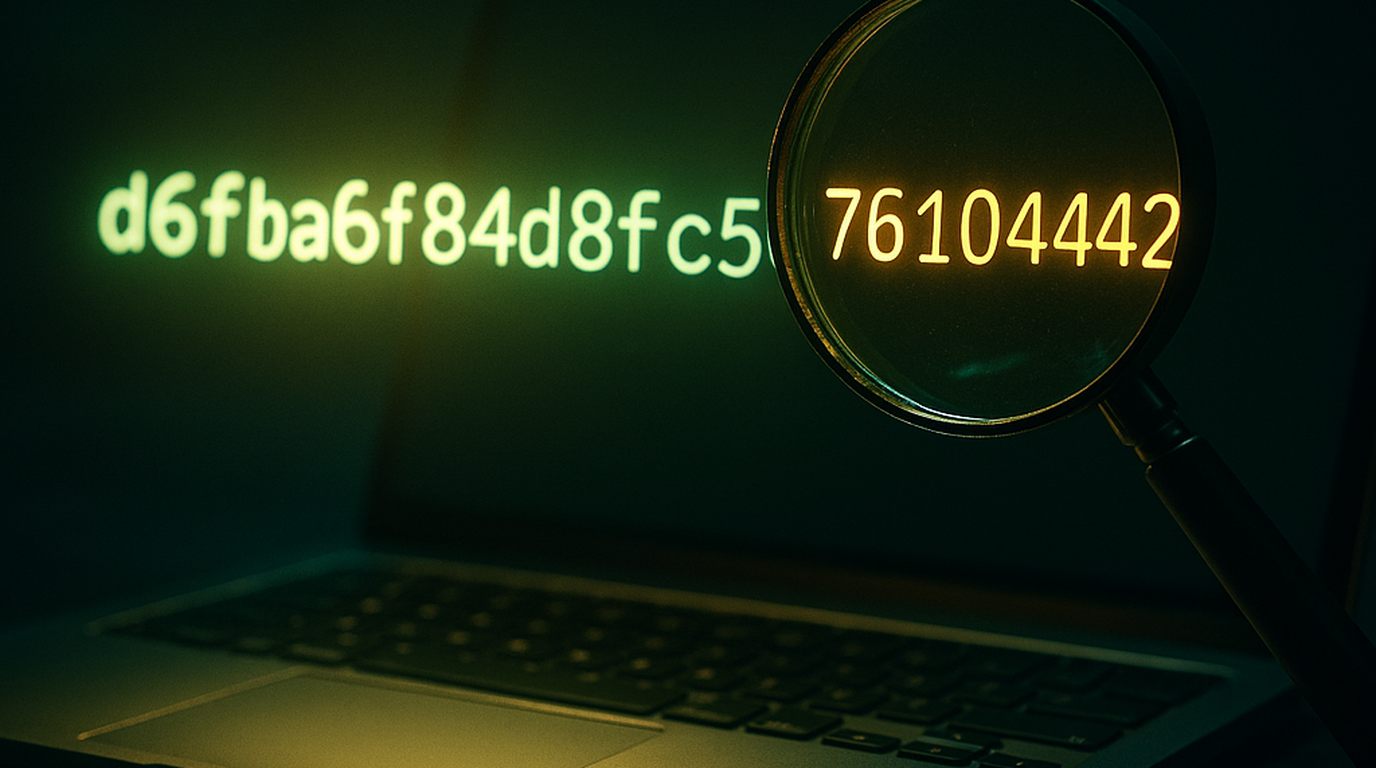
The first time someone explained Provably Fair to me, I thought it was a gimmick. This was back in 2019, and I was consulting for a crypto casino startup in Malta. The CTO — a kid half my age with more tattoos than social skills — sat me down and said, "We can mathematically prove every single game result is fair. The player can check it themselves."
I laughed. I'd spent two decades watching casinos operate, and the idea that a casino would voluntarily hand players the keys to verify their own results sounded like a fox inviting the chickens to audit the henhouse.
But he showed me the math. And I'll be damned — it actually works.
What "Provably Fair" Actually Means (No PhD Required)
Here's the deal in plain English. Every casino game comes down to a random outcome — a dice roll, a card deal, where the slot reel stops. In a traditional casino, you just have to trust that the random number generator is legit. You can't check it. You hope some regulator audited it, and you hope the audit wasn't a joke.
Provably Fair flips that on its head. Instead of trusting the casino, you can verify the result yourself — after every single bet. Not through some third-party auditor's PDF report from six months ago. Right now. On your screen. With math that a computer science freshman could follow.
The core idea is simple: the casino commits to a result before you place your bet. They can't change it after you've bet. And you can prove they didn't change it.
That's it. That's the entire concept. Everything else is implementation details.
How It Works: The Three Ingredients
Every Provably Fair system uses three pieces of data to generate a game result:
1. Server Seed (the casino's secret)
Before the game round starts, the casino generates a random string — the server seed. They don't show it to you yet. Instead, they show you a hash of it. A hash is a one-way fingerprint: you can turn any text into a hash, but you can't reverse-engineer the original text from the hash. It's like showing you the shadow of an object without showing the object itself.
This is the commitment. The casino is saying: "I've already decided the outcome, and here's proof I decided it before you bet. I'll reveal the actual seed after the round so you can check."
2. Client Seed (your secret)
This is a random string that you provide — or that the casino generates for you, but that you can change at any time. This is your skin in the game. Because the final result depends on both seeds, the casino can't rig the outcome. They committed to their seed before they knew yours.
Think of it like this: if you and I each pick a number, and we add them together, neither of us can control the sum. I committed to my number first (proved by the hash), and you picked yours freely.
3. Nonce (the round counter)
This is just a number that goes up by one with every bet. Round 1, round 2, round 3. It makes sure that even if the server seed and client seed stay the same, each round produces a different result. Without the nonce, you'd get the same outcome every time — which would defeat the purpose.
The Actual Math (Stay With Me)
When you place a bet, the system combines these three pieces using a cryptographic function called HMAC-SHA256. Don't let the name scare you — it's just a blender for data. You throw in the server seed, client seed, and nonce, and out comes a long string of letters and numbers. That string determines the game result.
For a crash game (like Stake's Crash or BC.Game's Classic Crash), it works like this:
- Combine: HMAC-SHA256(server_seed, client_seed + nonce)
- Take the first few characters of the output
- Convert them to a number
- That number becomes the crash point — 1.5x, 3.2x, 47x, whatever
For dice games, the process is similar but the number maps to a roll between 0 and 100. For mines, the output determines where the mines are placed on the grid.
The beauty is: you can run this exact same calculation yourself. If you get the same result the casino showed you, the game was fair. If you don't — something shady happened.
How to Actually Verify a Game Result
Here's the step-by-step. I'm going to walk you through this like I'm sitting next to you at the table, because honestly, most "how to verify" guides are written by people who've never actually done it.
Step 1: Find your bet details. After a round ends, go to your bet history. Every Provably Fair casino shows you the server seed hash (from before the bet), the server seed (revealed after), your client seed, and the nonce. If they don't show all four of these, that's a red flag.
Step 2: Check the hash. Take the revealed server seed and run it through a SHA-256 hash calculator. The result should match the hash they showed you before the round. If it matches, the casino didn't swap the seed after seeing your bet. This is the trust anchor — if this check passes, the commitment was real.
Step 3: Calculate the result. Take the server seed, your client seed, and the nonce. Run them through HMAC-SHA256. Apply the game's specific formula (crash, dice, mines — each has a slightly different conversion). Compare your calculated result to what the casino showed you.
Step 4: Breathe. If the numbers match, the game was fair. The casino couldn't have manipulated that result because they committed to the server seed before you placed your bet, and your client seed was out of their control.
I've built a Provably Fair Verifier tool right here on this site that does all of this automatically. Paste in your seeds, pick the game type, click verify. No downloads, no signups, runs entirely in your browser.
What Provably Fair Does NOT Prove
This is where most guides get lazy, and this is where my two decades of industry experience actually matter. Provably Fair is powerful, but it has limits. You need to understand them.
It doesn't prove the house edge is what they claim. A crash game can be Provably Fair and still have a 5% house edge instead of the advertised 1%. The fairness verification only proves that the result matches the committed seed — it doesn't prove the mathematical formula produces the odds they claim. For that, you'd need to analyze thousands of results statistically, or trust an independent audit of the algorithm.
It doesn't apply to third-party games. If a crypto casino offers Pragmatic Play slots, Evolution live dealers, or Playtech table games — those are NOT Provably Fair. They're running on the game provider's servers with their own RNG, just like in any traditional online casino. Provably Fair only works on games the casino built themselves, where they control the random number generation.
This is a big one. I see players all the time who think that because they're on a "Provably Fair casino," every game they play is verifiable. It's not. Usually only the casino's house games — crash, dice, mines, plinko, keno, and similar — are actually Provably Fair. The rest is traditional RNG with a different wrapper.
It doesn't prevent other forms of cheating. A Provably Fair casino can still delay your withdrawals, hit you with unexpected KYC requests, void your winnings on technicalities, or simply disappear with your deposit. Provably Fair means the game math is honest. It says nothing about the business practices.
Which Casinos Actually Support Provably Fair?
Not every crypto casino offers it. In fact, most don't. Here are the major players that do:
Stake — The biggest name in crypto gambling. Their original games (Crash, Dice, Plinko, Mines, Hilo, Keno, Limbo) are all Provably Fair. They publish their verification method openly. If you're new to Provably Fair verification, Stake's system is the most straightforward to check.
BC.Game — Strong Provably Fair implementation across their house games. They also provide detailed documentation for how each game type converts the hash to a result. Good for players who want to understand the math under the hood.
Roobet — Offers Provably Fair on their Crash and a few original games. Their implementation is solid, though the game selection is smaller than Stake or BC.Game.
Duelbits — Provably Fair on their original game suite. Growing platform with competitive house edges.
A word of caution: some smaller casinos claim to be "Provably Fair" but don't actually provide the verification data, or they provide it in a format that makes it nearly impossible to check. If a casino says "Provably Fair" but won't give you the server seed after a round, or doesn't show the seed hash before the round — they're using the term as marketing, not as a real system.
Not sure which games are actually verifiable? Check my Provably Fair Cheat Sheet — a complete list of every major provider and whether their games support player verification.
Why This Matters More Than You Think
I've watched this industry from the inside for 23 years. I've seen rigged roulette wheels, shaved dice, and software that could adjust slot payouts on the fly. I've also seen perfectly legitimate operations get accused of cheating by players who just had a bad night.
Provably Fair doesn't solve everything. But it solves the most fundamental question in gambling: "Was this game result actually random, or did the house cheat me?"
For the first time in the history of gambling, the player can answer that question themselves. Not a regulator. Not an auditor. You. With math. On your screen. After every single bet.
If you ask me — the guy who's been on both sides of the table for over two decades — that's genuinely revolutionary. It doesn't make gambling safe (nothing does), and it doesn't guarantee you'll win (nothing does that either). But it removes one of the oldest uncertainties in the game.
Go try it yourself. Use our Provably Fair Verifier, grab the seeds from your last Stake or BC.Game session, and check the math. Once you see it work with your own eyes, you'll never look at online gambling the same way.
Wondering why you can't verify your favorite Pragmatic Play or Playtech slots? I wrote a full explanation: Why You CAN'T Verify Playtech Slots — And Why Provably Fair Casinos Are Different.
And if a casino won't let you verify? Walk away. There are enough honest options out there that you don't need to gamble blind.